

Every home cook needs a great beef stew recipe in their repertoire, and this is everything I want in a classic beef stew — beef so tender it practically melts in your mouth, plenty of hearty carrots and potatoes, and a rich, savory gravy that's absolutely delicious.
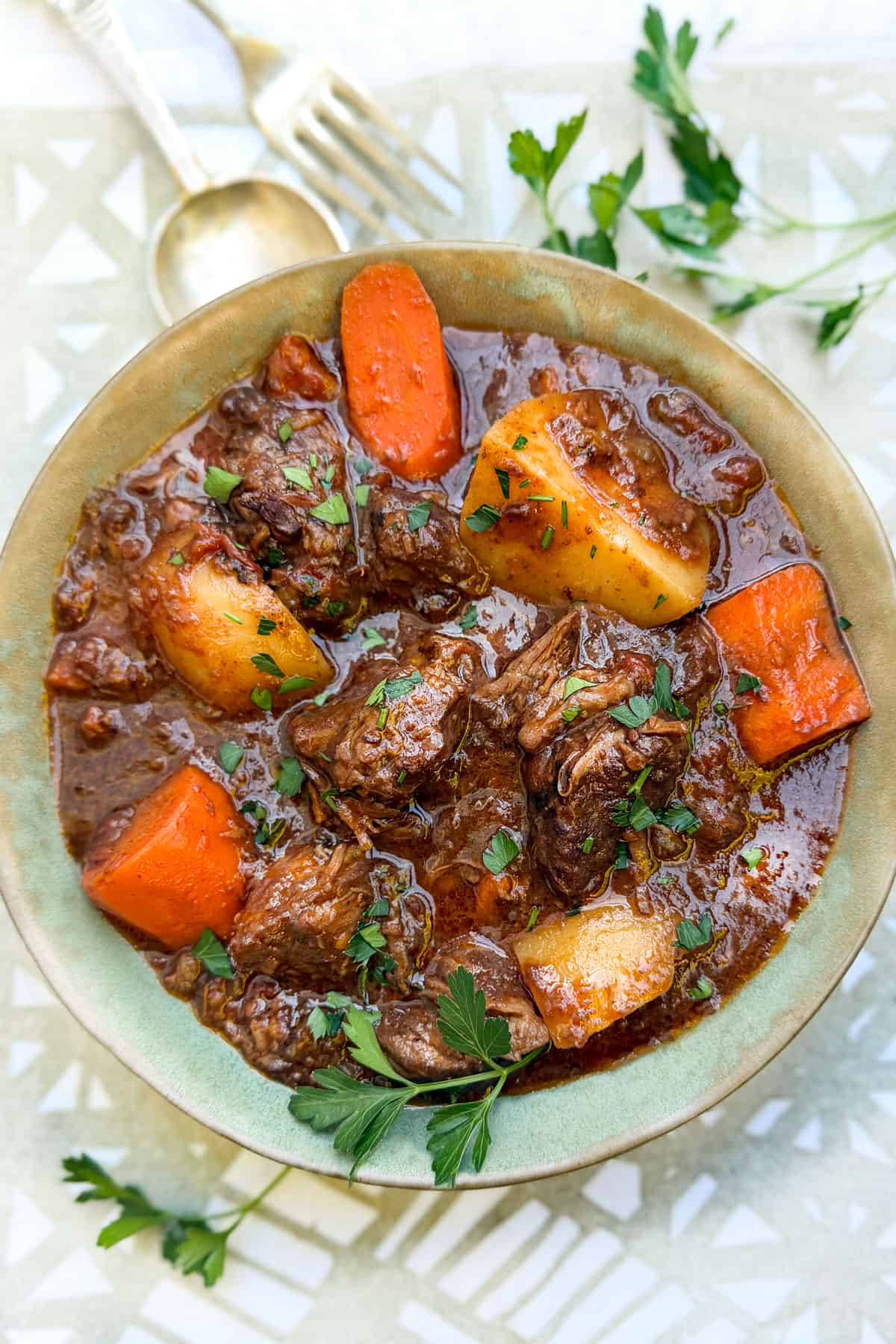
Stew season is my favorite. When the weather turns cold, there's nothing better than being cozy inside with a pot of beef stew simmering on the stove. As a cook, there’s something wonderfully satisfying about taking hard, cold, raw ingredients and transforming them, through a long, gentle simmer, into something so comforting. And if you could only see the expression on my husband’s face when I tell him beef stew is on the menu for dinner.
Over the years, I’ve made dozens of stews for Panning the Globe — from exquisite French beef bourguignon to luscious Cuban ropa vieja to vibrant Ghanaian peanut stew with chicken. Along the way, I’ve learned a thing or two about how to make a good stew.
My goal with this recipe was simple: a classic, all-American beef stew. Meat and potatoes in gravy, done well. Nothing fancy, just the right ingredients cooked the right way. What matters most to me is the beef. It should be fall-apart tender, which in my opinion is the most important quality in a beef stew. Also, I don’t skimp on the potatoes, because I want them in every mouthful, and there’s got to be plenty of rich, flavorful gravy for spooning over mashed potatoes or dipping crusty bread.
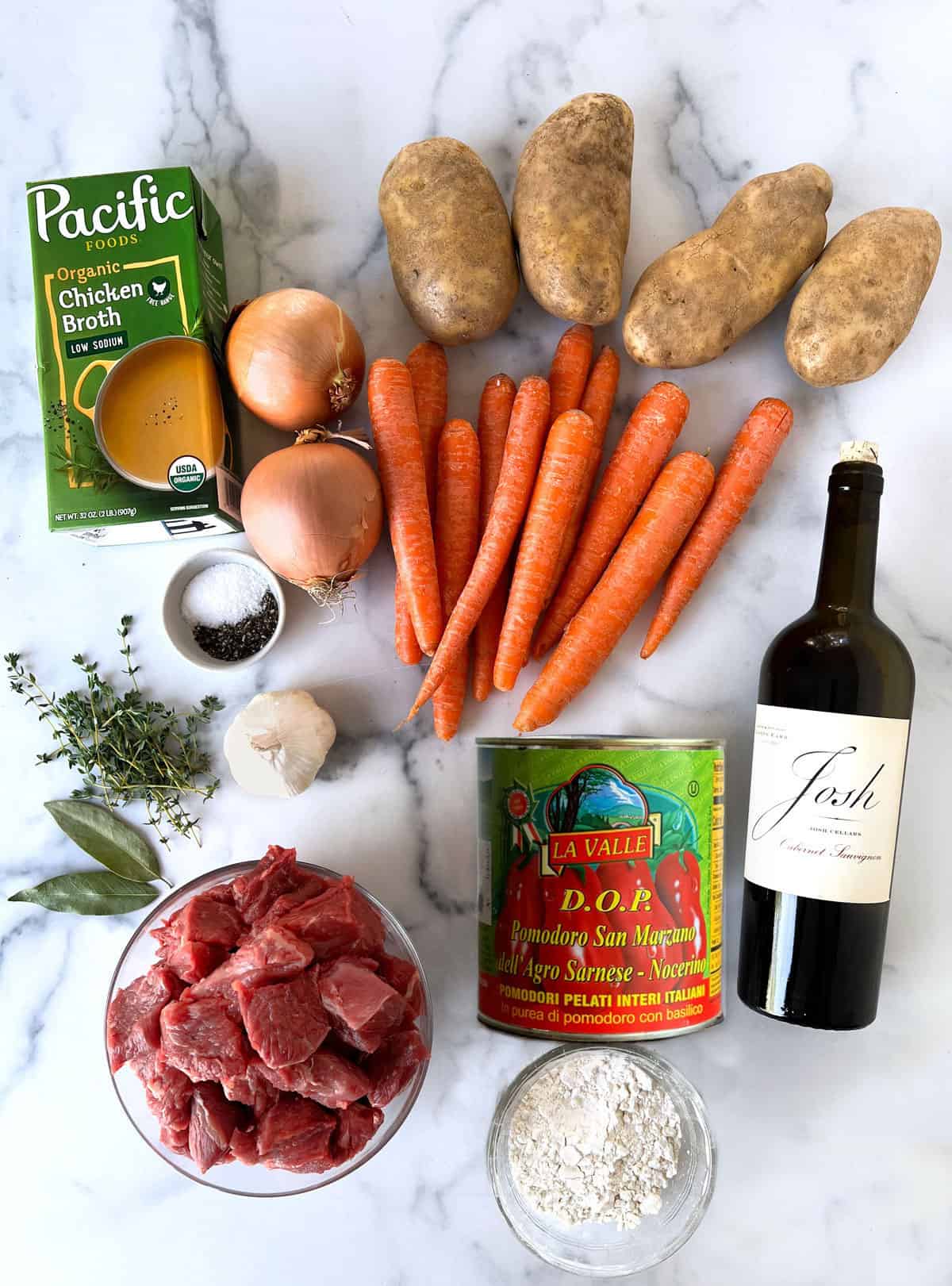
The Ingredients:
- Beef: I recommend beef chuck for the most tender, flavorful stew. You can buy stew meat already cubed, but if you have time, buy a whole chuck roast and cut it yourself. That way, you can trim the excess fat and gristle and cut the beef into evenly sized pieces.
- All-purpose flour: Helps the beef brown and thickens the stew into a rich gravy. For a gluten-free version, skip the flour and thicken the gravy at the end with a cornstarch slurry (see recipe notes). I’ve often made beef stew without flouring the beef, and it still browns beautifully.
- Onions: Onions are fundamental to building the deep, rich flavor of a good beef stew.
- Carrots: Carrots are used twice in this recipe. The first batch is sliced thinly and sautéed with the onions to flavor the stew. The rest are cut into chunks and added toward the end so they're perfectly cooked — tender but still holding their shape and bright orange color.
- Dry red wine: A full bottle, such as Cabernet Sauvignon or Zinfandel. Choose one you’d enjoy drinking.
- Chicken broth: I prefer it to store-bought beef broth (see the tips below).
- Canned tomatoes: Good quality Italian plum tomatoes with their juices, chopped or crushed by hand.
- Garlic, thyme and bay leaves: To flavor the gravy.
- Potatoes: Both russets and Yukon Golds work well. I slightly prefer the flavor of russets, but they're more delicate and don't hold their shape quite as well as Yukon Golds. Either is a good choice.
Walk-through of this recipe with photos
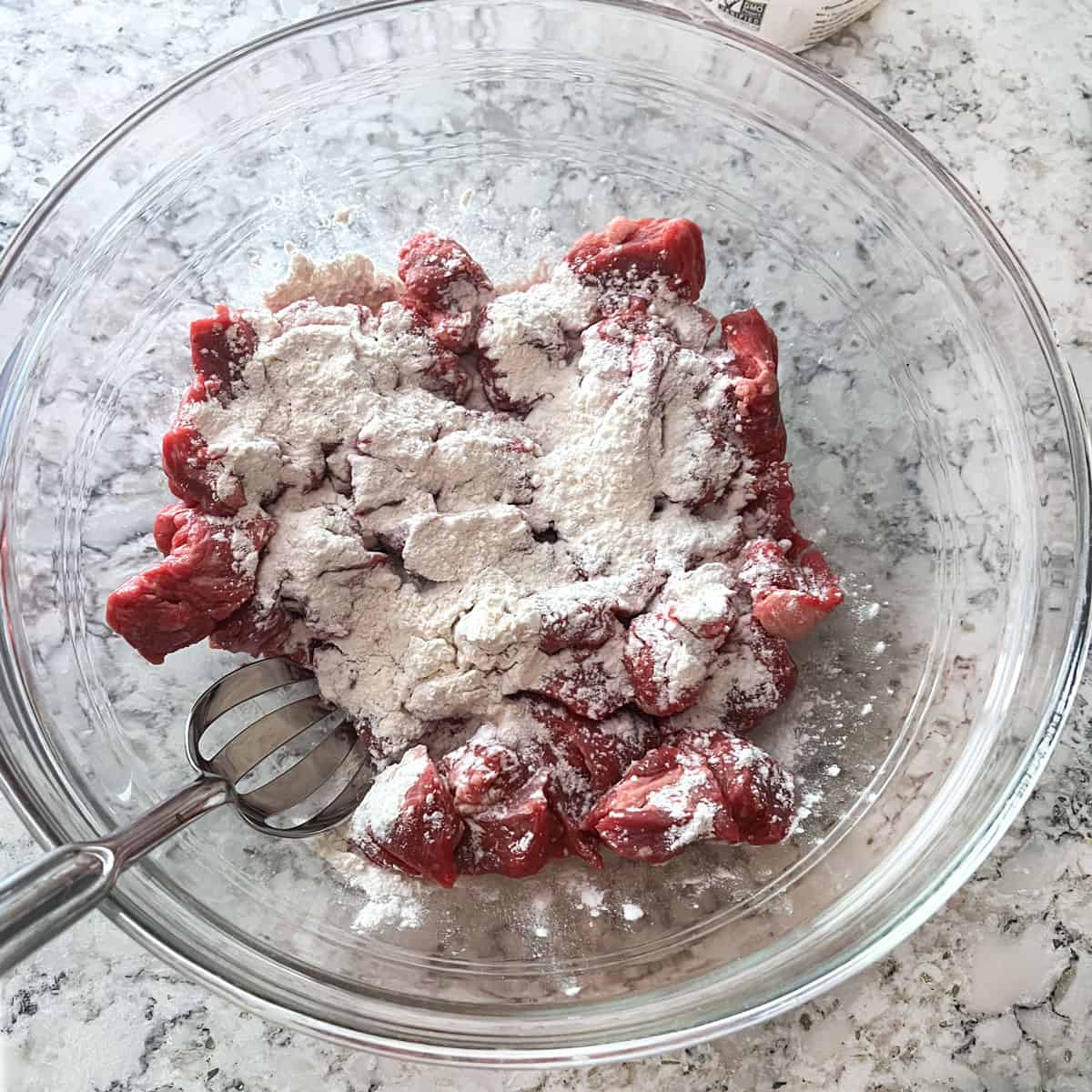
1. Pat the beef dry with paper towels and toss it with flour — the flour helps give the beef a good sear and it also thickens the stew as it cooks.
2. Brown the beef in small batches — Sear the beef in the same pot you'll use to cook the stew. The goal is to develop a deeply browned crust on the meat and create flavorful browned bits on the bottom of the pot that will enrich the gravy.
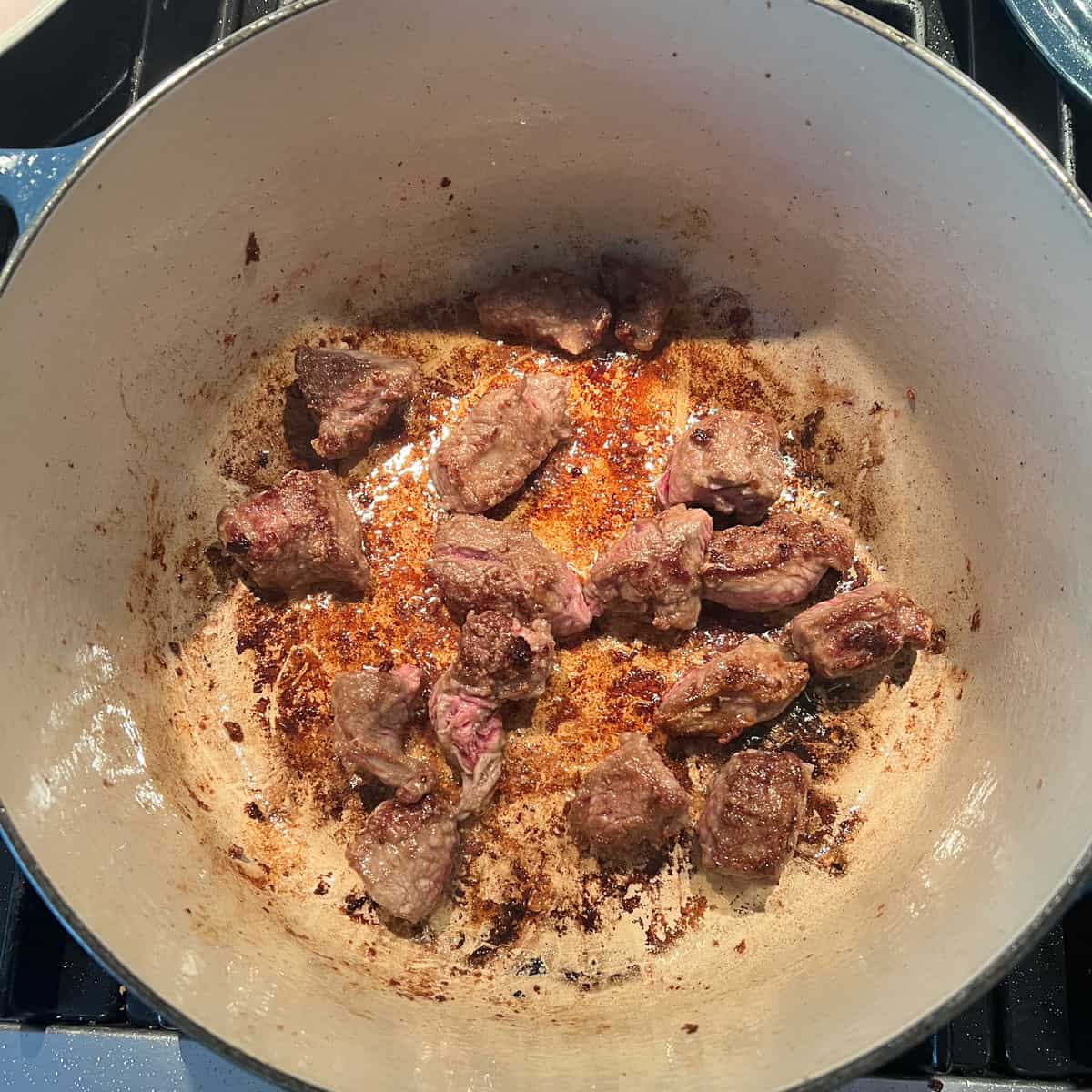
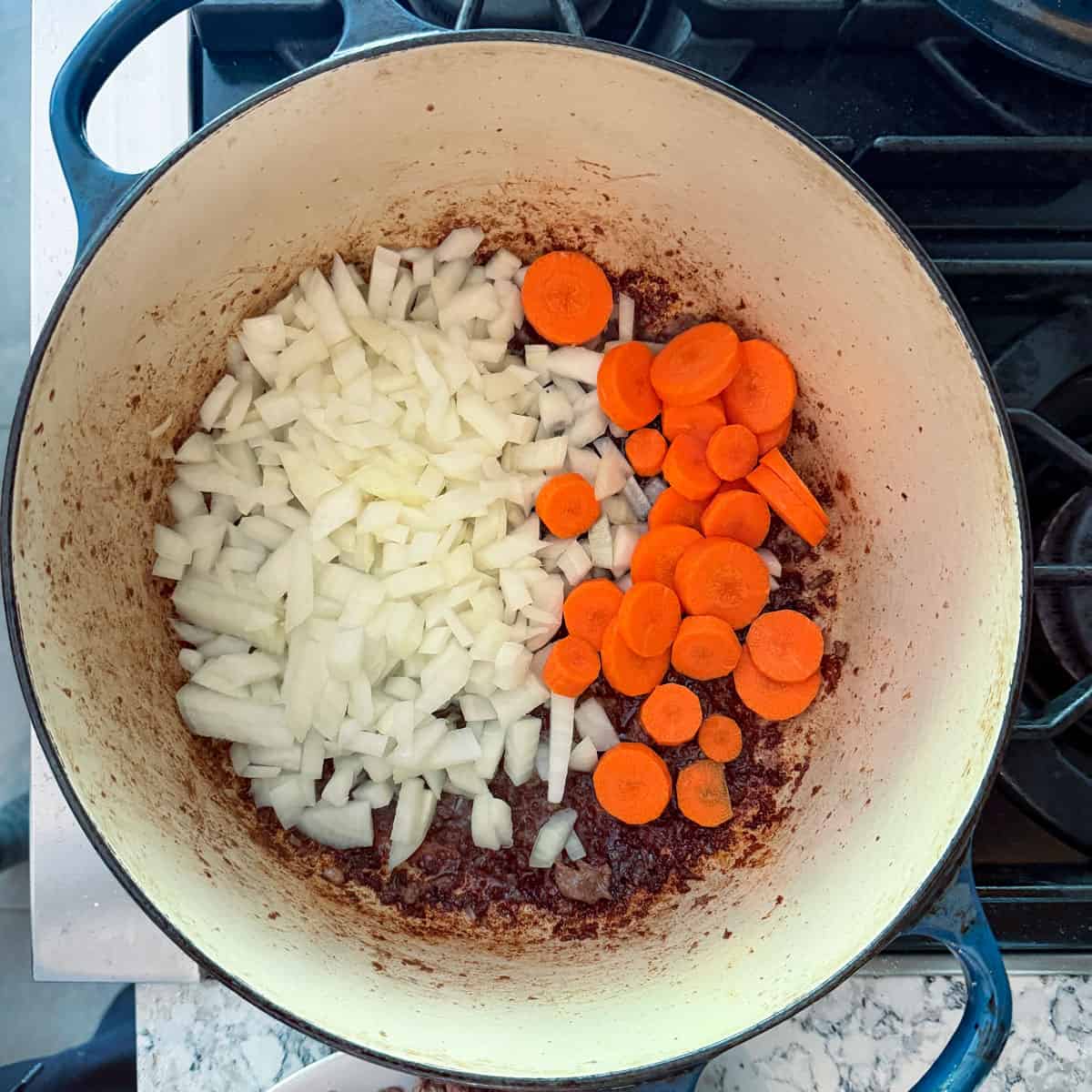
3. After transferring the browned beef to a plate, add a little more oil to the pot and sauté the onions and carrots until they soften and begin to brown, about 4–5 minutes.
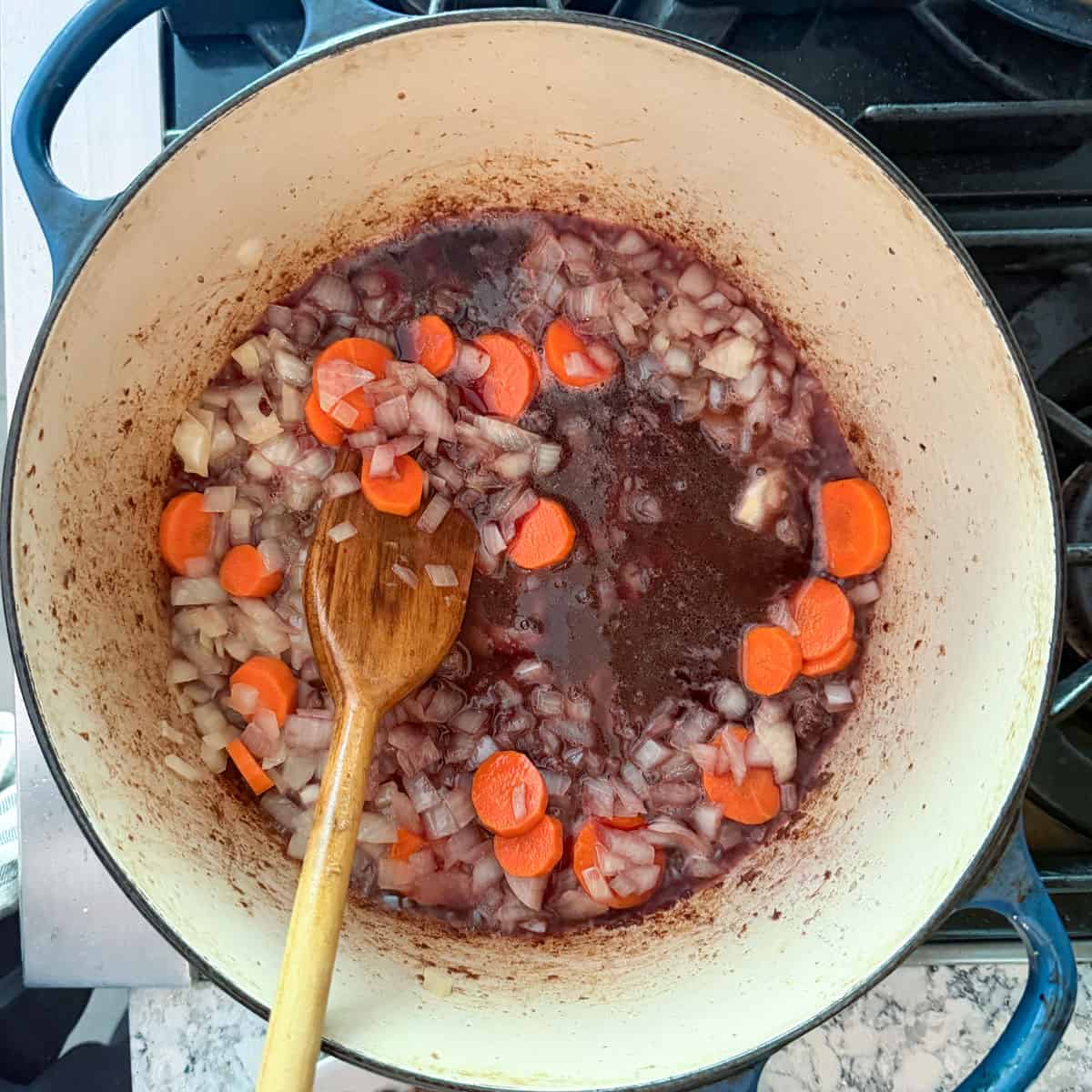
4. Pour in 1 cup of red wine and simmer, stirring and scraping the bottom of the pot with a wooden spoon to release all those flavorful browned bits.
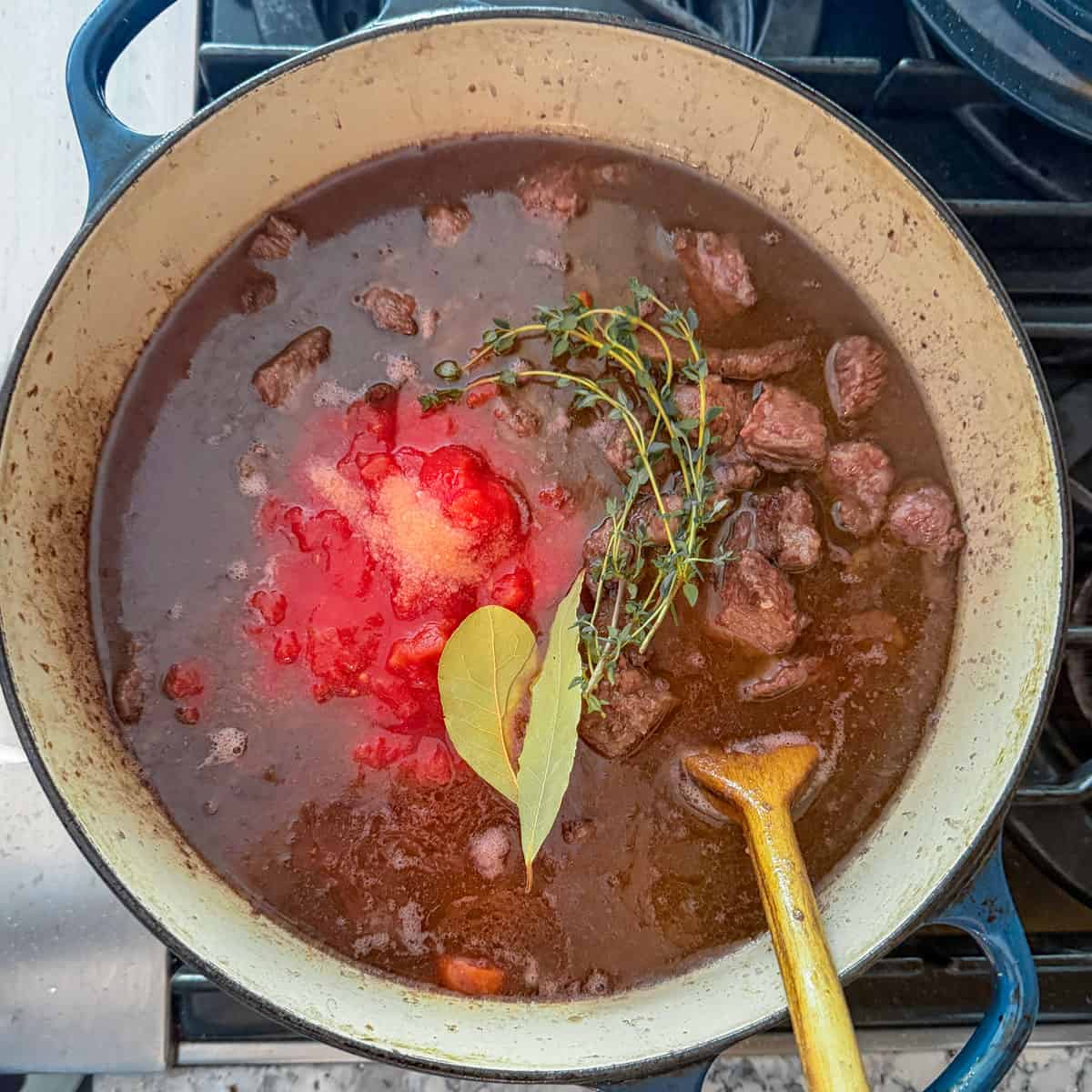
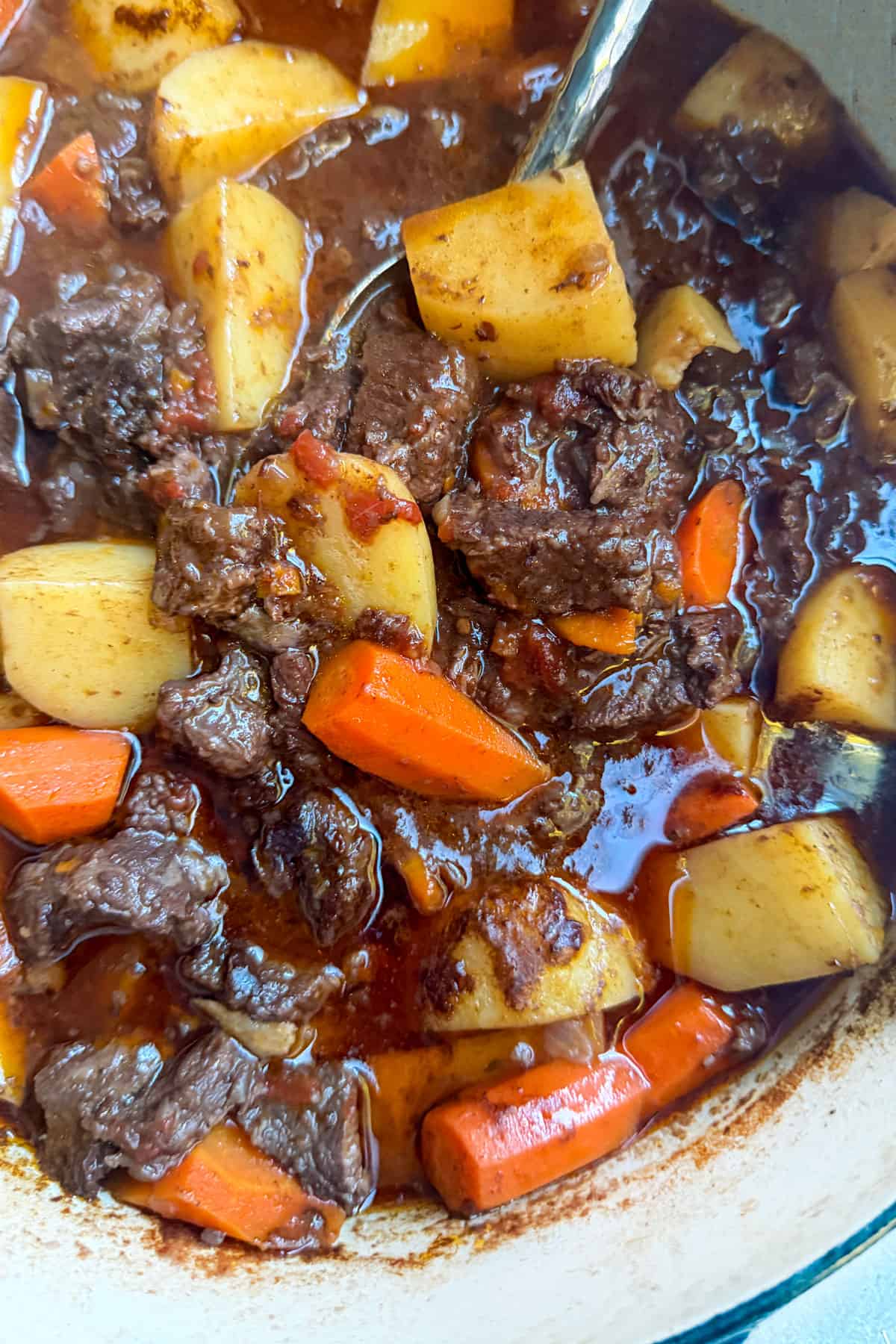
5. Return the beef to the pot along with the rest of the wine, the broth, tomatoes, garlic, thyme, bay leaves and salt. Bring to a simmer, reduce the heat, and cook uncovered at a gentle simmer for about 2 hours, until the beef is fall-apart tender.
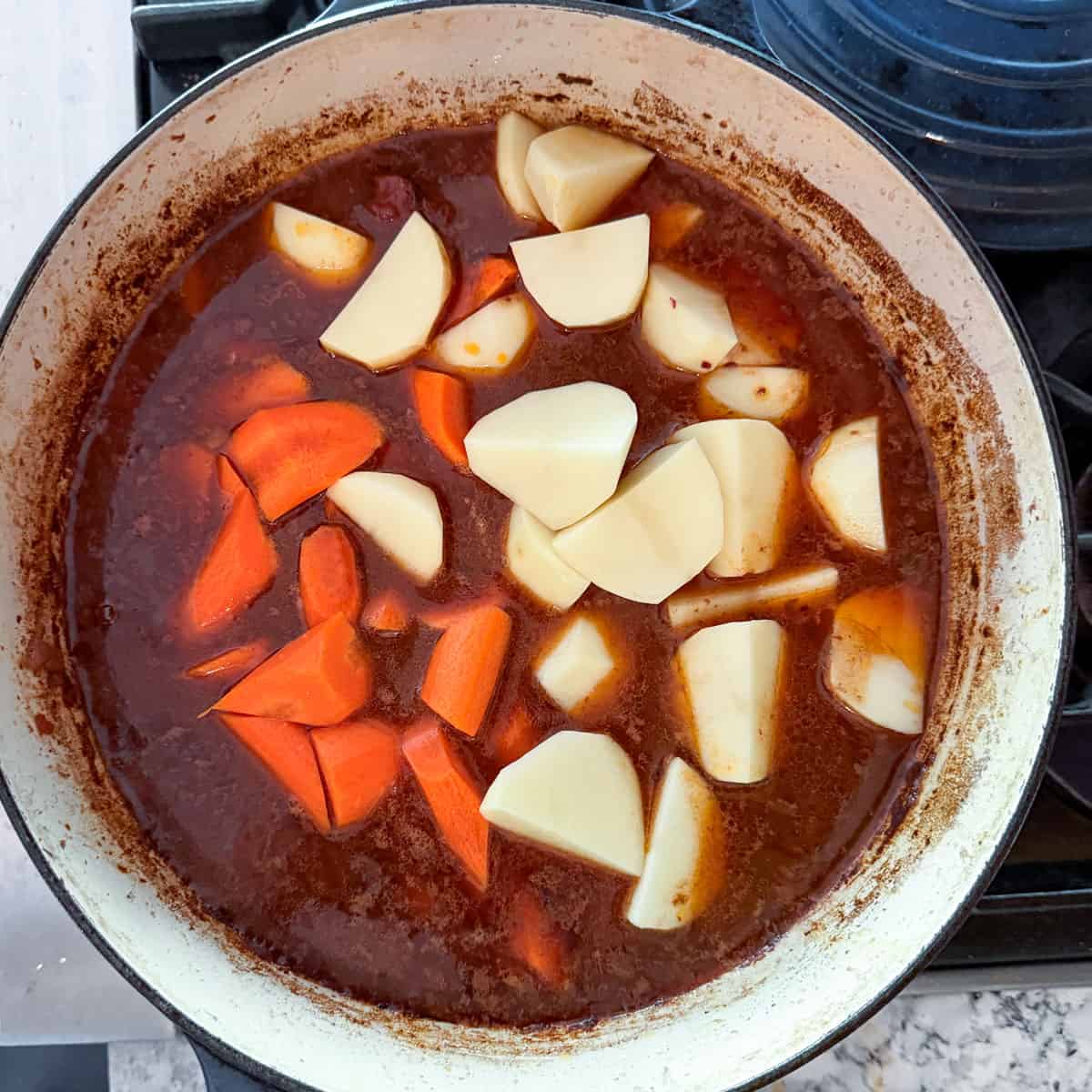
6. Add the carrots and potatoes, pushing them down into the gravy. Continue simmering for about 30 minutes, until the vegetables are tender and the gravy has thickened
If you have time, let the stew rest for an hour or so before serving. Better yet, make it a day ahead — like most stews, this one tastes even better after the flavors have had time to meld.
Five Tips for Making the Best Beef Stew
1. Choose the right cut of meat
The irony of beef stew is that some of the less expensive cuts of beef are actually the best. If you make beef stew with tenderloin, one of the most expensive and tender cuts, you'll be disappointed. Cooking low and slow is the key to tender stew, but not all beef gets tender that way. You want a tough cut from a hard-working, muscular part of the cow, like chuck (from the shoulder) or short ribs (from the rib section). These cuts have lots of connective tissue, which breaks down into gelatin when cooked slowly at a low temperature, making the meat meltingly tender.
Want To Save this Recipe?
2. Pat the beef dry and brown it in batches
If you try to brown moist beef, it releases steam and ends up simmering in a pool of liquid instead of browning. On top of that, meat naturally releases juices as it cooks, so if too much is crowded into the pot, it turns into a steam bath and the meat won’t brown. That brown crust is crucial. It’s an extra layer of flavor created by the Maillard reaction, which happens when the proteins and sugars in the meat react to high heat and form new, savory flavor compounds. The drier the meat, the better the sear.
3. Use chicken broth unless you have good homemade beef broth
Many store-bought beef broths have surprisingly little beef flavor and rely heavily on salt and other flavorings. Store-bought chicken broth tastes much better to me. My favorite brands are Swanson’s Organic and Pacific Organic. Combined with a full bottle of red wine and the browned bits from searing the beef, it makes a rich, deeply flavored gravy.
4. Cook the stew at a gentle simmer until the meat is tender
Even the best stew meat can turn tough if you boil it. High heat makes the muscle fibers tighten and squeeze out their juices. At a gentle simmer, with just a few bubbles breaking the surface, the connective tissue has time to break down into gelatin — a very good thing for tender meat. Don’t go by the clock alone. The beef is done when it falls apart easily under the pressure of a fork.
5. Add vegetables toward the end
Of course, a great stew needs some vegetables right from the start. In this recipe, onions and thinly sliced carrots are used as a flavor base for the stew. But if you want vegetables in your stew that taste fresh and hold their shape, you need to know how long each one takes to cook at a simmer, and add it to the pot when that much time remains. Carrot chunks and potatoes need about 30 minutes, so they go in for the last half hour.
How to Store and Freeze Beef Stew
- Refrigerating: Beef stew is even better the next day, after the flavors have had time to meld. Let it cool, then store it in an airtight container in the refrigerator for up to 4 days.
- Freezing: Beef stew freezes well for up to 3 months, but the potatoes don't hold up particularly well. They tend to soften and fall apart when thawed and reheated. If you're making this stew specifically to freeze, I recommend leaving out the potatoes and adding freshly boiled potatoes when you reheat the stew.
- Reheating: Thaw frozen stew overnight in the refrigerator, then reheat gently on the stovetop, pot covered, until heated through, adding a splash of broth or water if the gravy needs thinning.
Serving Suggestions
- I personally love to serve stew with a salad. I especially love this crisp tricolore salad, with three different lettuces and a bright lemon vinaigrette. It's the perfect contrast to rich, savory beef stew. But there are so many other great sides to consider:
- Crusty bread for sopping up the sauce and wiping the bowl clean at the end.
- Mashed potatoes, a quintessential side for stew. You may think it isn’t necessary in a stew that already has potatoes, but we’re talking about love here, not need!
- Mashed root vegetables — parsnips, turnips or sweet potatoes, boiled and mashed with a little butter or olive oil, salt and pepper.
- Or simply serve the stew on its own. It has everything you need for a hearty, satisfying meal.
If you try this beef stew recipe, I hope you'll come back to leave a star rating and a comment. I'd love to know what you think!
Print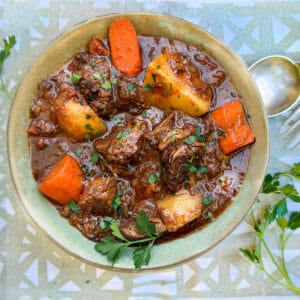
Classic Beef Stew Recipe
- Total Time: 2 hrs 55 min
- Yield: 8 servings 1x
Description
A classic pot of beef stew with fork-tender meat, plenty of carrots and potatoes, and a rich red wine gravy.
Ingredients
- 3 pounds boneless beef chuck roast, trimmed of excess fat and cut into 1 to 1 ½-inch cubes
- ⅓ cup all-purpose flour (see notes for a gluten-free version)
- 5 tablespoons neutral cooking oil, divided, plus more as needed
- 1 ½ to 2 yellow onions, chopped (about 2 cups)
- 1 ¼ pounds carrots, divided: about a quarter sliced into thin rounds (about 1 cup), the rest cut on the diagonal into 1 ½-inch chunks
- 3 cups (1 bottle) dry red wine, such as Cabernet Sauvignon or Zinfandel, divided
- 3 to 4 cups low-sodium chicken broth, divided
- 2 cups canned Italian plum tomatoes with some of their juices (from a 28-ounce can), chopped or crushed by hand
- 3 large cloves garlic, smashed or roughly chopped
- 5 sprigs fresh thyme (or 1 teaspoon dried)
- 2 dried bay leaves
- 2 pounds potatoes (russets or golds), peeled and cut into 1 to 1 ½-inch cubes
- 1 ½ teaspoons kosher salt, plus more to taste
- Freshly ground black pepper
Want To Save this Recipe?
Instructions
- Flour the beef: Put the beef in a large bowl and pat it dry with paper towels. Sprinkle the flour over it and toss well to coat.
- Brown the beef: Heat 3 tablespoons oil in a large Dutch oven or heavy-bottomed pot with a lid, over medium-high heat. When hot, add a quarter of the beef and sear, turning occasionally, until golden brown, about 4 minutes. Transfer to a plate. Repeat with the remaining beef in three more batches, adding a tablespoon of oil at a time as needed. Tilt the pot and spoon out most of the fat.
- Sauté the vegetables: Add the remaining 2 tablespoons oil to the pot. Heat for a minute, then add the onions and sliced carrots. Sauté, stirring occasionally, until tender and starting to brown, 4 to 5 minutes.
- Deglaze: Pour in 1 cup of the wine and simmer, stirring and scraping the bottom of the pot with a wooden spoon to release the browned bits.
- Simmer: Return the beef to the pot with any accumulated juices. Add the remaining 2 cups wine, 3 cups of the broth, the tomatoes, garlic, thyme, bay leaves, 1½ teaspoons salt and several grinds of pepper. Bring to a simmer over high heat, then lower the heat to maintain a gentle simmer and cook, uncovered, for 2 hours.
- Add the carrots and potatoes: Add the carrot chunks and potatoes, pushing them down into the sauce. Bring back to a simmer and cook for 30 minutes more, until the vegetables are tender. If the stew is thicker than you like, stir in some of the remaining broth.
- Serve: Remove the thyme sprigs and bay leaves. Taste and season with more salt and pepper if needed. Serve hot, with crusty bread or mashed potatoes.
Notes
1. Best beef for beef stew: I recommend beef chuck, a relatively inexpensive cut that becomes tender when it’s simmered for a long time. You can buy stew meat already cubed, but if you have time, buy a whole chuck roast and cut it yourself, so you can trim the fat and gristle and get the size pieces you want.
2. Flour for beef stew: Flouring the beef helps create a flavorful browned crust when it's seared and thickens the broth into a rich gravy as the stew simmers.
3. Best red wine for beef stew: Use a dry red you’d enjoy drinking, such as Cabernet Sauvignon or Zinfandel.
4. Broth for beef stew: I use store-bought chicken broth rather than beef broth, which I find has an artificial flavor. My favorite brands are Swanson’s Organic and Pacific Organic. If you have homemade beef broth, that works well too.
5. To make this beef stew gluten-free: Skip the flour when browning the beef. The beef will still develop a beautiful brown crust. At the end of cooking, if you'd like a thicker gravy, mix 1 tablespoon of cornstarch with 1 tablespoon of cold water to make a slurry. Stir it into the simmering stew and cook briefly until thickened. Repeat if needed.
- Prep Time: 25 min
- Cook Time: 2 hrs 30 min
- Category: Stew
- Method: simmer
- Cuisine: American

Comments
No Comments